
Proper nutrition plays a vital role in managing dementia symptoms and maintaining overall health for those living with this condition. A well-designed meal plan can reduce confusion around eating, ensure adequate nutrient intake, and create positive dining experiences that support both physical and emotional wellbeing.
Understand Nutritional Challenges in Dementia
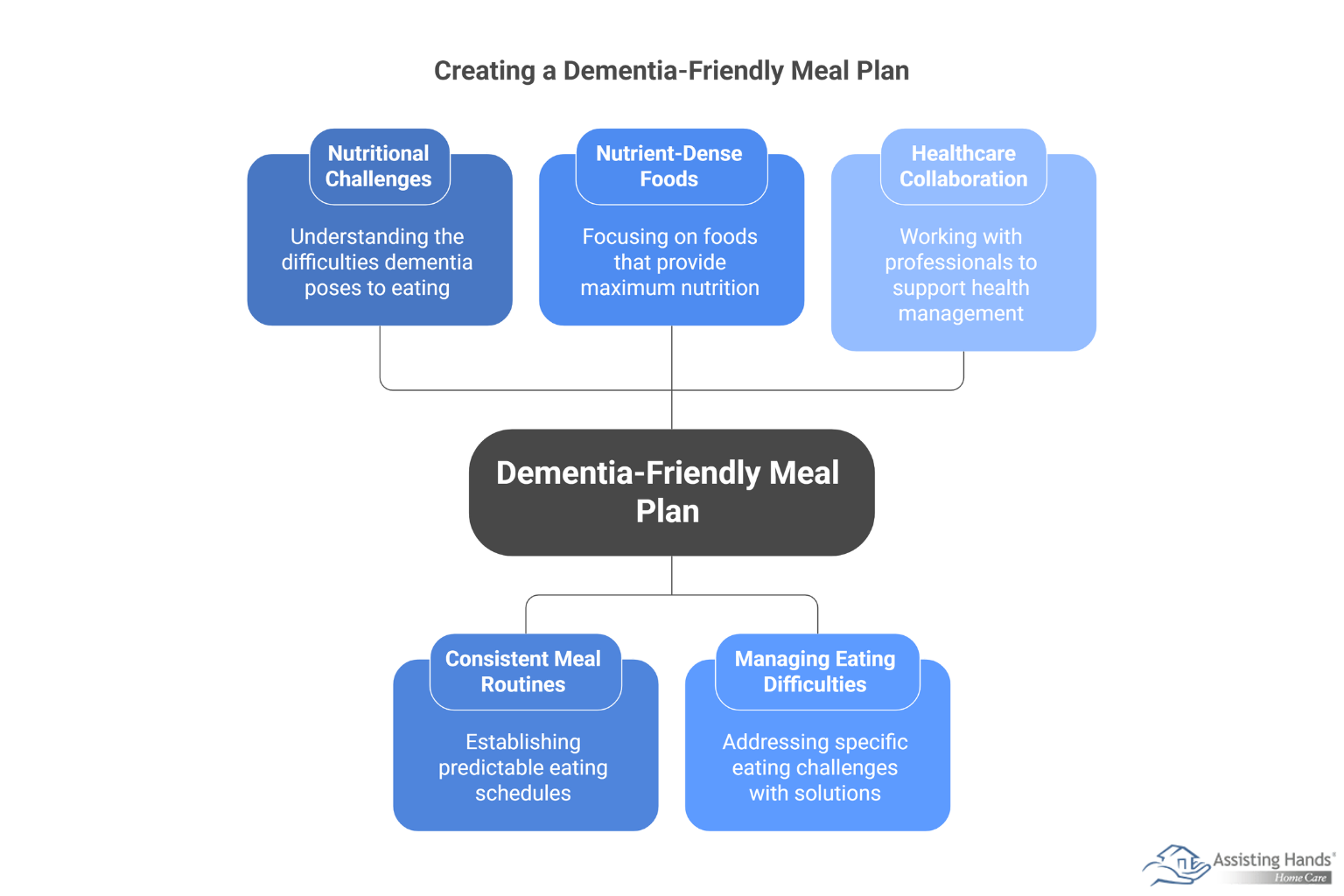
Dementia affects eating habits and nutritional intake in numerous ways that require careful attention from caregivers and family members.
People with dementia may forget to eat meals, lose interest in food, or have difficulty with the physical act of eating. They might not recognize hunger cues or remember how to use utensils properly. Additionally, medications can affect appetite and taste perception, while changes in smell and taste can make previously enjoyed foods seem unappetizing.
- Memory loss can lead to skipped meals or eating the same foods repeatedly.
- Difficulty swallowing (dysphagia) may develop as the condition progresses.
- Sensory changes affect food appeal and recognition.
- Behavioral symptoms like agitation can disrupt regular eating patterns.
- Motor skill decline makes self-feeding increasingly challenging.
Understanding these challenges helps caregivers anticipate problems and develop strategies that work around cognitive and physical limitations rather than fighting against them.
If your senior loved one has been diagnosed with a serious condition and needs help with tasks like meal prep, transportation, medication reminders, bathing, and grooming, reach out to Assisting Hands Home Care, a leading provider of senior Home Care Las Vegas families can trust. We also offer comprehensive care for seniors with dementia, Alzheimer’s, and Parkinson’s.
Establish Consistent Meal Routines
Creating predictable eating schedules reduces confusion and anxiety while ensuring regular nutrient intake throughout the day.
Set specific times for breakfast, lunch, and dinner along with healthy snacks between meals. Consistency helps people with dementia know what to expect and can trigger appetite responses at appropriate times. Aim for five to six smaller meals rather than three large ones, as this approach is often easier to manage and digest.
- Serve meals at the same times each day to establish routine.
- Create a calm, distraction-free dining environment.
- Use familiar plates, utensils, and table settings when possible.
- Limit choices to prevent overwhelming decision-making.
- Allow plenty of time for eating without rushing.
Consider your loved one’s personal preferences and past eating habits when establishing routines. Someone who always enjoyed a large breakfast might continue responding well to substantial morning meals even if other eating patterns change.
Consider hiring a professional caregiver if you need someone to prepare nutritious meals for your loved one. Homecare providers can benefit aging adults in a variety of ways. From cooking nutritious meals to offering timely medication reminders, the dedicated caregivers at Assisting Hands Home Care are available to help your elderly loved one 24 hours a day, 7 days a week
Choose Nutrient-Dense, Easy-to-Eat Foods
Focus on foods that provide maximum nutritional value while being simple to prepare, serve, and consume safely.
Soft, moist foods are often easier to chew and swallow than dry or tough textures. Finger foods can help your loved one maintain independence when using utensils becomes difficult. Colorful foods may be more visually appealing and stimulate appetite when cognitive changes affect food recognition.
- Include lean proteins like eggs, fish, chicken, and beans.
- Offer soft fruits and cooked vegetables for vitamins and fiber.
- Choose whole grains in easy-to-eat forms like oatmeal or soft bread.
- Provide healthy fats through avocados, nuts, and olive oil.
- Ensure adequate hydration with water, milk, and other fluids.
Avoid foods that pose choking risks, such as whole nuts, hard candies, or large pieces of raw vegetables. When swallowing becomes more difficult, consider pureeing foods while maintaining appealing colors and flavors.
Manage Common Eating Difficulties
Address specific eating challenges with practical solutions that maintain dignity while ensuring safety and proper nutrition.
If your loved one forgets to eat, use visual cues like setting out snacks or gently guiding him or her to the dining area at mealtimes. For those who eat too quickly, serve smaller portions and encourage conversation during meals to slow the pace.
- Use contrasting plate colors to help with food recognition.
- Serve one course at a time to avoid overwhelming choices.
- Provide adaptive utensils with larger grips if needed.
- Offer foods at appropriate temperatures to prevent burns.
- Stay patient and offer gentle encouragement throughout meals.
Some people with dementia may refuse certain foods or become fixated on eating only specific items. Work with your loved one’s preferences when possible while gradually introducing variety. If your loved one insists on eating dessert first, consider making nutritious desserts using fruits or yogurt.
Work with Healthcare Professionals
Collaborate with medical professionals to address nutritional concerns and ensure meal plans support overall health management.
Regular consultations with doctors, registered dietitians, and speech therapists can help you identify changing needs and adjust meal plans accordingly. These professionals can provide specific guidance for managing medication interactions with food, addressing swallowing difficulties, and maintaining proper weight.
- Schedule regular nutritional assessments to monitor changes.
- Discuss any concerning eating behaviors with healthcare providers.
- Consider speech therapy evaluation if swallowing becomes difficult.
- Monitor weight changes and adjust portions as needed.
- Review medications that might affect appetite or digestion.
Document eating patterns, food preferences, and any difficulties you observe. This information helps healthcare providers make informed recommendations and track how nutritional interventions are working over time.
Aging in place can present a few challenges for seniors living with dementia. However, they can still live independently at home with the help of professional dementia care. Las Vegas families can rely on Assisting Hands Home Care to provide their elderly loved ones with mental and social stimulation, timely medication reminders, assistance with meal prep, and much more. Our caregivers are available around the clock to help your loved one live a happier and healthier life. Schedule a free in-home consultation by giving us a call today.