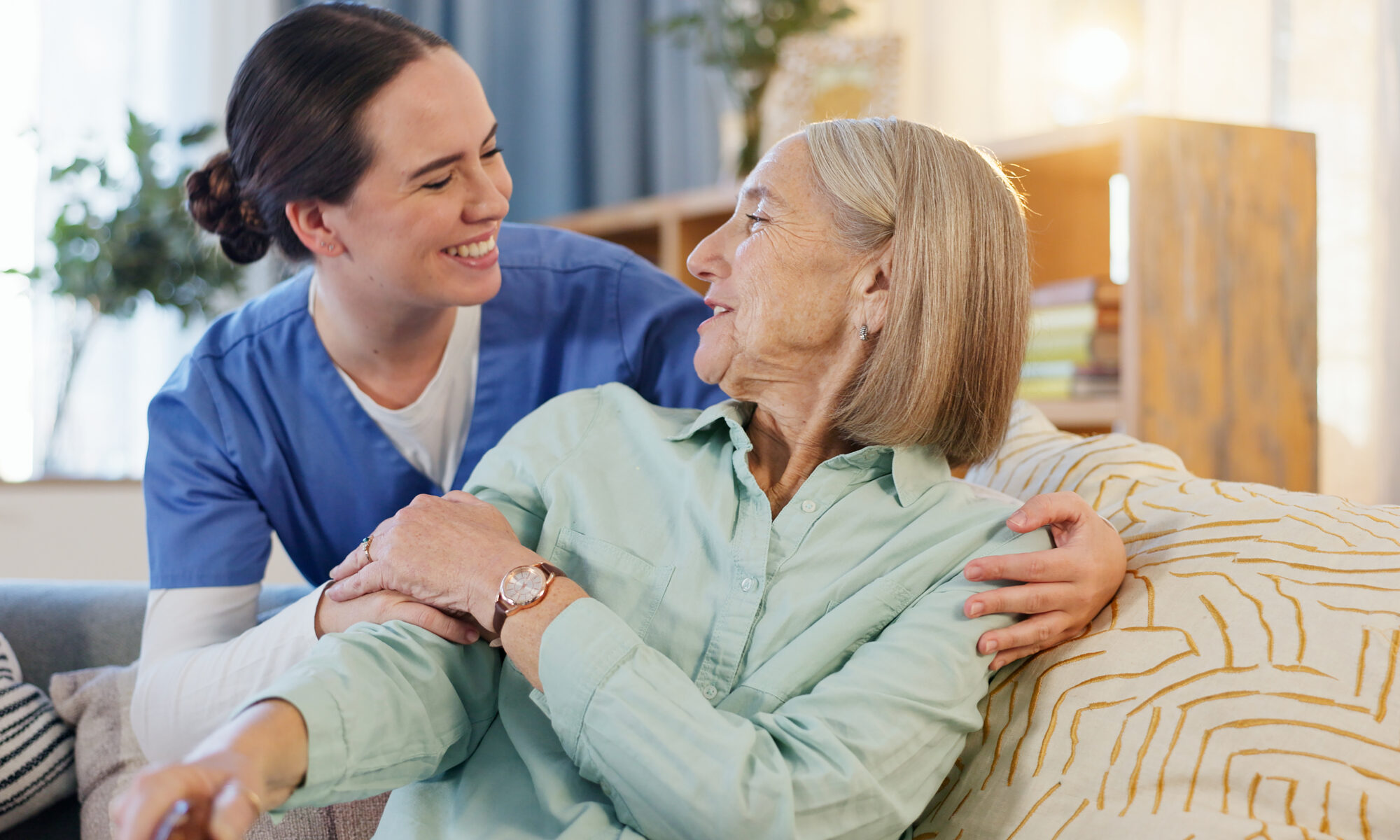
Effective communication in dementia care at home means using simple language, calm body language, and techniques to reduce confusion and maintain connection. Strategies like short sentences, visual cues, and validation therapy help caregivers navigate daily interactions with greater ease and compassion.
Caring for a senior loved one with dementia at home presents unique communication challenges, but the right strategies can make a meaningful difference. As dementia progresses, verbal communication often becomes harder, making it essential to adapt how you speak, listen, and respond.
How Does Dementia Affect Communication at Home?
Dementia gradually damages the parts of the brain responsible for language and memory, which directly impacts how a person expresses and understands information.
- Short-term memory loss makes it hard to follow conversations.
- Word-finding difficulties lead to frustration and withdrawal.
- Reduced attention spans mean lengthy explanations are often lost.
- Emotional responses may become disproportionate or unpredictable.
Living with dementia can make it difficult for seniors to manage everyday tasks on their own. Certain age-related conditions can make it more challenging for seniors to age in place safely and comfortably, but Las Vegas 24-hour home care experts are available around the clock to help seniors manage their health. Whether your loved one is living with dementia or recovering from a stroke, you can trust the professional caregivers from Assisting Hands Home Care to enhance his or her quality of life. At Assisting Hands Home Care, we take measures to help seniors prevent illness and injury by assisting with exercise and mobility, preparing nutritious meals, helping with bathing and other personal hygiene tasks, and much more.
What Are the Most Effective Verbal Communication Strategies for Dementia Care?
Simple intentional language reduces confusion and keeps conversations manageable.
- Use short, clear sentences with one idea at a time.
- Speak slowly and allow extra time for responses.
- Avoid open-ended questions. Offer two simple choices instead (e.g., “Would you like tea or water?”).
- Use your loved one’s name often to maintain his or her attention.
- Avoid correcting or arguing. Redirect rather than contradict.
Trained caregivers who have experience in communicating with seniors with dementia can be a fantastic resource for family members. If your senior loved one has been diagnosed with a serious condition and needs help with tasks like meal prep, transportation, medication reminders, bathing, and grooming, reach out to Assisting Hands Home Care, a leading provider of Las Vegas senior home care. We also offer comprehensive care for seniors with dementia, Alzheimer’s, and Parkinson’s.
How Can Nonverbal Communication Enhance Interactions with Someone Who Has Dementia?
Nonverbal cues often carry more weight than words for someone with dementia, especially in later stages.
- Maintain gentle eye contact to signal warmth and attention.
- Use a calm, reassuring tone. Even when the words aren’t fully understood, tone is.
- Smile, nod, and use open body language to encourage engagement.
- Physical touch (a hand on the shoulder) can provide comfort when words fall short.
- Point to objects or use visual aids to reinforce what you’re saying.
What Is Validation Therapy, and How Does It Help with Dementia Communication?
Validation therapy is a communication approach developed by Naomi Feil in the 1960s that focuses on acknowledging and respecting the feelings and experiences of a person with dementia rather than correcting the individual.
- Instead of saying “That’s not right,” try “That sounds frustrating. Tell me more.”
- Entering your loved one’s reality reduces anxiety and conflict.
- This approach fosters dignity, trust, and emotional connection.
- Validation therapy is especially helpful during moments of confusion or distress.
How Can Caregivers Create a Communication-Friendly Home Environment?
The physical environment plays a significant role in how well communication flows day to day.
- Reduce background noise (TV, radio) during conversations.
- Ensure good lighting so facial expressions are clearly visible.
- Keep routines consistent. Predictability reduces confusion and anxiety.
- Use labeled photos or picture cards to support word recognition.
- Place familiar objects in view to spark memory and conversation.
Aging in place can present a few challenges for seniors living with dementia. However, with professional dementia home care that offers Las Vegas families peace of mind, they can still live independently at home. Families can rely on Assisting Hands Home Care to provide their elderly loved ones with mental and social stimulation, timely medication reminders, assistance with meal prep, and much more. Our caregivers are available around the clock to help your loved one live a happier and healthier life. Call today to speak with a friendly and experienced Care Specialist to formulate a home care plan for your loved one
Frequently Asked Questions
What’s the best way to start a conversation with a loved one who has dementia?
+
Approach calmly, make eye contact, and use your loved one’s name. Then introduce yourself if needed and keep your opening statement simple and friendly.
How should caregivers respond when seniors with dementia repeat themselves?
+
Respond with patience each time as though it’s the first time you’ve heard it. Showing frustration can cause distress and further withdrawal.
Is it normal for someone with dementia to stop speaking altogether?
+
Yes, in later stages of dementia, verbal communication may become very limited or cease entirely, making nonverbal strategies like touch, music, and routine even more important.
How can family members communicate more effectively during visits?
+
Keep visits calm and unhurried, avoid quizzing your loved one on memories, and focus on shared activities or familiar topics that evoke positive emotions.
What should caregivers do when communication becomes a source of conflict?
+
Step back, give space, and return to the conversation later. Trying to resolve conflict in the moment often escalates distress for both the caregiver and the person with dementia.