
Creating a personalized care plan for an aging family member requires careful consideration of his or her unique needs, preferences, and health conditions. A well-designed senior care plan ensures your loved one receives appropriate support while maintaining his or her dignity and independence. Here’s how to develop a comprehensive care plan that truly serves your loved one’s individual requirements.
Assess Current Health and Mobility Needs
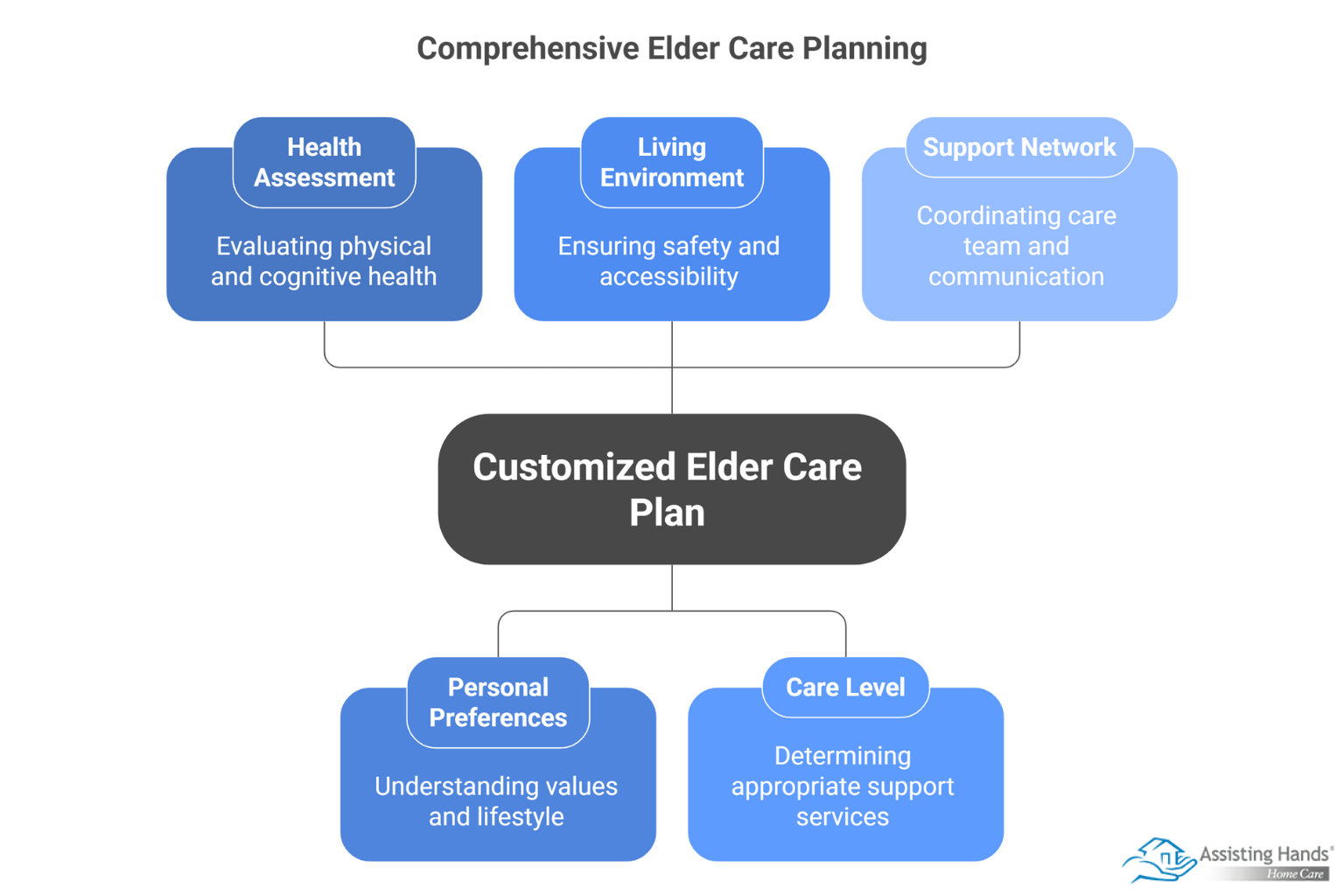
Begin by conducting a thorough evaluation of your loved one’s physical and cognitive health status. This assessment forms the foundation of any effective care plan.
- Schedule comprehensive medical evaluations with your loved one’s primary care physician.
- Document any chronic conditions, medications, and treatment requirements.
- Evaluate mobility limitations and fall risks throughout the living space.
- Assess cognitive function and memory-related concerns.
- Note any sensory impairments affecting vision or hearing.
Consider involving occupational therapists or geriatricians in this assessment process. They can provide professional insights into areas you might overlook and recommend specific interventions or equipment needs.
Consider Personal Preferences and Lifestyle
Understanding your loved one’s values, interests, and daily routines helps you create a care plan your family member will actually embrace rather than resist.
- Discuss your loved one’s preferred daily schedule and most important activities.
- Identify hobbies, social connections, and meaningful pursuits your loved one wants to maintain.
- Respect your loved one’s independence preferences and decision-making autonomy.
- Consider cultural, religious, or dietary requirements that matter to your family member.
- Ask about your loved one’s comfort level with different types of caregivers or support staff.
Remember that forcing unwanted changes often leads to resistance and decreased quality of life. Work collaboratively to find solutions that honor your loved one’s wishes while addressing safety concerns.
Evaluate Living Environment and Safety
The physical environment plays a crucial role in supporting senior independence and preventing accidents or injuries.
- Install grab bars, ramps, and other accessibility modifications as needed.
- Ensure adequate lighting throughout all living areas and pathways.
- Remove tripping hazards like loose rugs or clutter in walkways.
- Consider kitchen and bathroom safety upgrades for easier daily tasks.
- Evaluate whether the current home layout supports your loved one’s mobility needs.
Sometimes environmental modifications can eliminate the need for more intensive care interventions. Simple changes like lever-style door handles or raised toilet seats can significantly enhance daily functioning.
Seniors can face a variety of challenges as they age, many of which can be mitigated with the help of professional in-home caregivers who provide high-quality home care service. Trust Assisting Hands Home Care to help your elderly loved one age in place safely and comfortably, including assistance with housekeeping help for seniors to manage daily chores efficiently.
Determine Appropriate Care Level and Services
Based on your assessment, identify what types of support services will best meet your loved one’s needs without providing unnecessary assistance.
- Start with the least restrictive care level that ensures safety and wellbeing.
- Consider in-home care services like housekeeping, meal preparation, or personal care.
- Evaluate transportation needs for medical appointments and social activities.
- Explore adult day programs or community senior centers for social engagement.
- Research respite care options to support family caregivers.
Care needs often change over time, so build flexibility into your plan. Regular reassessments help you adjust services as conditions evolve rather than waiting for crisis situations.
The type of Home Care Las Vegas seniors need can vary. Some need assistance a few hours a day, while others require more extensive around-the-clock assistance. At Assisting Hands Home Care, we tailor our care plans based on each senior’s individual care needs, and the plans can be adjusted at any time. We are a trusted provider of respite and 24-hour care, and we also offer specialized Alzheimer’s, dementia, Parkinson’s, and stroke care for seniors.
Create a Support Network and Communication Plan
Effective senior care involves coordinating multiple people and services while maintaining clear communication channels.
- Identify family members, friends, and neighbors who can provide regular support.
- Establish relationships with reliable home care agencies or individual caregivers.
- Create an emergency contact list that includes medical professionals and nearby relatives.
- Set up regular check-ins and communication schedules among care team members.
- Consider technology solutions like medical alert systems or medication reminders.
Document important information in an easily accessible format that all care team members can reference. Include medical history, emergency contacts, medication lists, and specific care instructions or preferences.
Personalizing a senior care plan requires ongoing attention and adjustment as needs change. Regular communication with your loved one ensures the plan continues serving his or her best interests while providing peace of mind for the entire family.
Aging in place can present a few unique challenges for older adults. Some only require part-time assistance with exercise or meal preparation, while others are living with serious illnesses and benefit more significantly from receiving live-in care. Las Vegas, NV, Assisting Hands Home Care are leaders in the elderly in-home care industry for good reason. We tailor our care plans based on each senior’s individual needs, our caregivers continue to receive updated training in senior care as new developments arise, and we also offer comprehensive care for seniors with Alzheimer’s, dementia, and Parkinson’s. Call us today to create a customized in-home care plan.